Iran rejects ceasefire as Trump says war could end soon
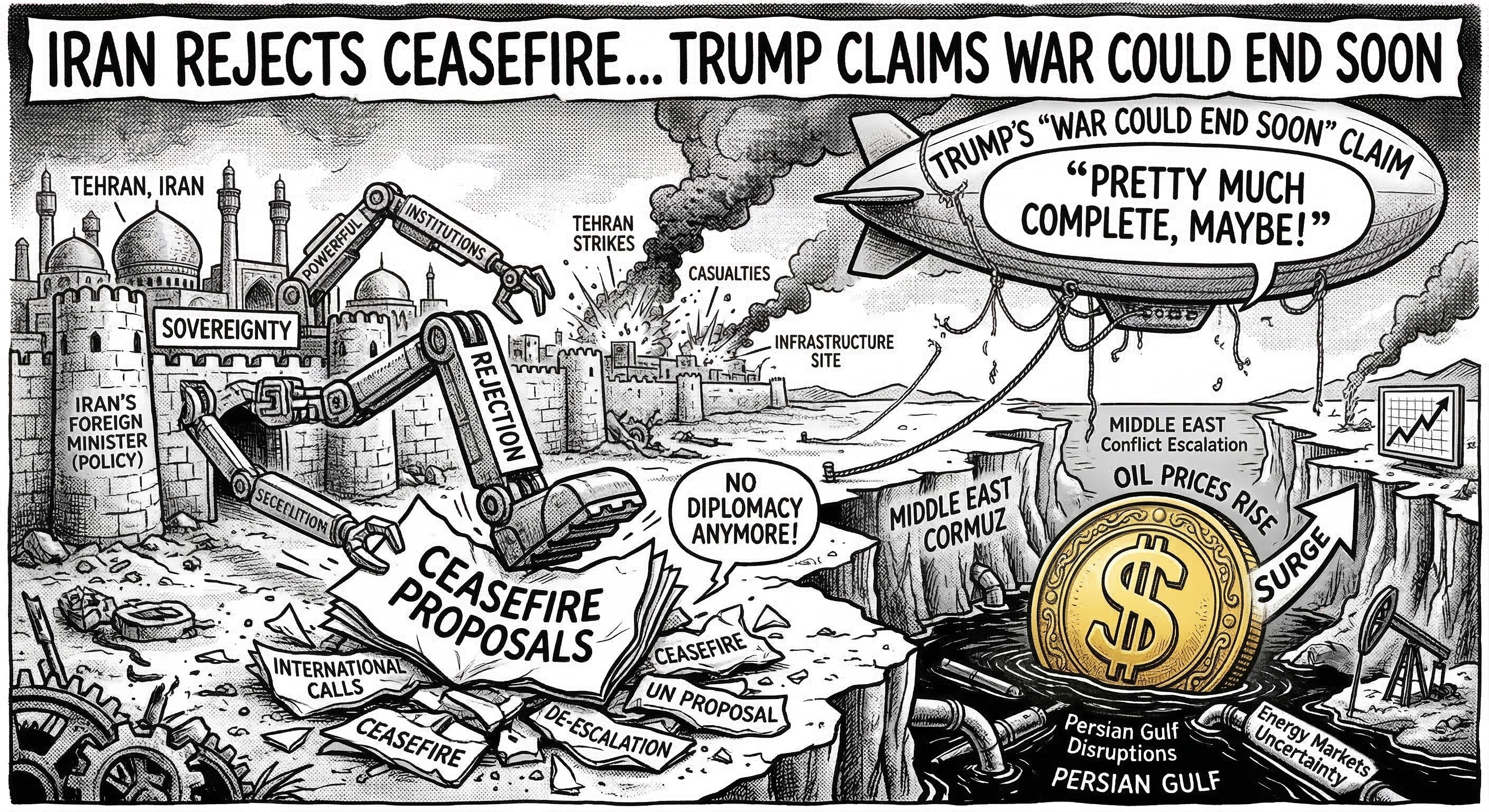
The Iran war continues to escalate as Tehran rejects ceasefire proposals while US President Donald Trump claims the conflict could end soon.
Iran’s foreign minister said the country will continue fighting despite growing international calls for de-escalation in the Middle East war. Officials in Tehran argue that military operations are a response to strikes carried out by the United States and Israel, and insist Iran will defend its sovereignty and strategic interests.
The latest Iran war developments include reports of dozens of casualties following strikes in Tehran, highlighting the humanitarian impact of the ongoing conflict. Iranian authorities say the attacks targeted military and civilian infrastructure sites, while damage in the capital has raised concerns about the risk of broader escalation.
At the same time, Trump has suggested that the US-Israel-Iran conflict could conclude in the near future, though he did not provide details about negotiations or conditions that might bring an end to the fighting. His remarks come as diplomatic efforts continue behind the scenes, with several governments urging restraint and a return to negotiations.
The Iranian foreign minister’s rejection of ceasefire calls signals that Tehran intends to continue resisting what it describes as foreign aggression. Analysts say this stance reflects both domestic political pressure and the influence of powerful security institutions during wartime.
Beyond the battlefield, the Iran conflict is also affecting global markets. Oil prices have risen amid fears that the fighting could disrupt supply routes in the Persian Gulf, including shipping through the Strait of Hormuz, increasing uncertainty across international energy markets and global economies.