UK stance on Iran war tests Starmer’s US-Israel balance
The UK’s stance on the Iran conflict has become a key issue in British politics as Prime Minister Keir Starmer tries to balance alliance commitments with calls for restraint in the Middle East.
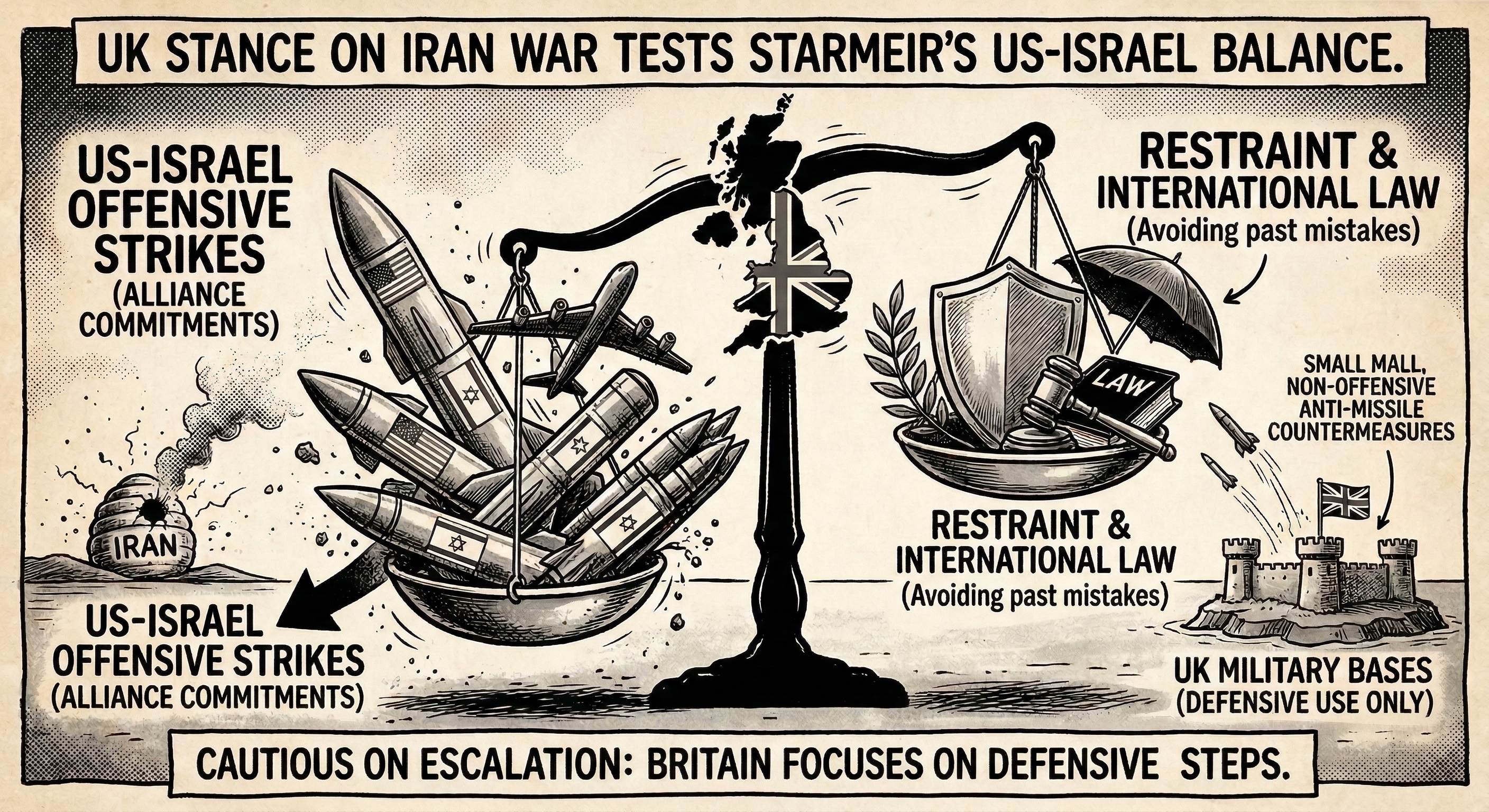
After the United States and Israel launched military strikes on Iran, the British government chose not to join the initial offensive. Starmer argued that Britain’s foreign policy should be guided by international law and careful evaluation rather than quick military action. Instead, the UK’s decision was to focus on defensive steps and safeguarding British interests in the region.
The government later permitted the United States to use certain British military bases for limited defensive operations aimed at intercepting Iranian missile threats. British forces have also participated in defensive missions, including air operations designed to protect allied facilities and British nationals across the Middle East. These actions reflect Britain’s effort to support regional security without engaging in offensive military operations.
This cautious approach has sparked a wide debate on UK policy towards Iran. Critics believe Britain should show stronger support for its closest ally, the United States, while supporters argue the government is avoiding the mistakes of past interventions in the region.
Tensions between Starmer and Donald Trump have also revealed strains in the traditional UK-US relationship during the conflict. Despite disagreements, ministers insist that cooperation between the two countries remains robust through intelligence sharing, defensive coordination, and military planning.
As the Iran conflict unfolds, Britain’s diplomatic stance remains focused on de-escalation, protecting British citizens abroad, and renewed calls for negotiations to prevent a broader regional war.