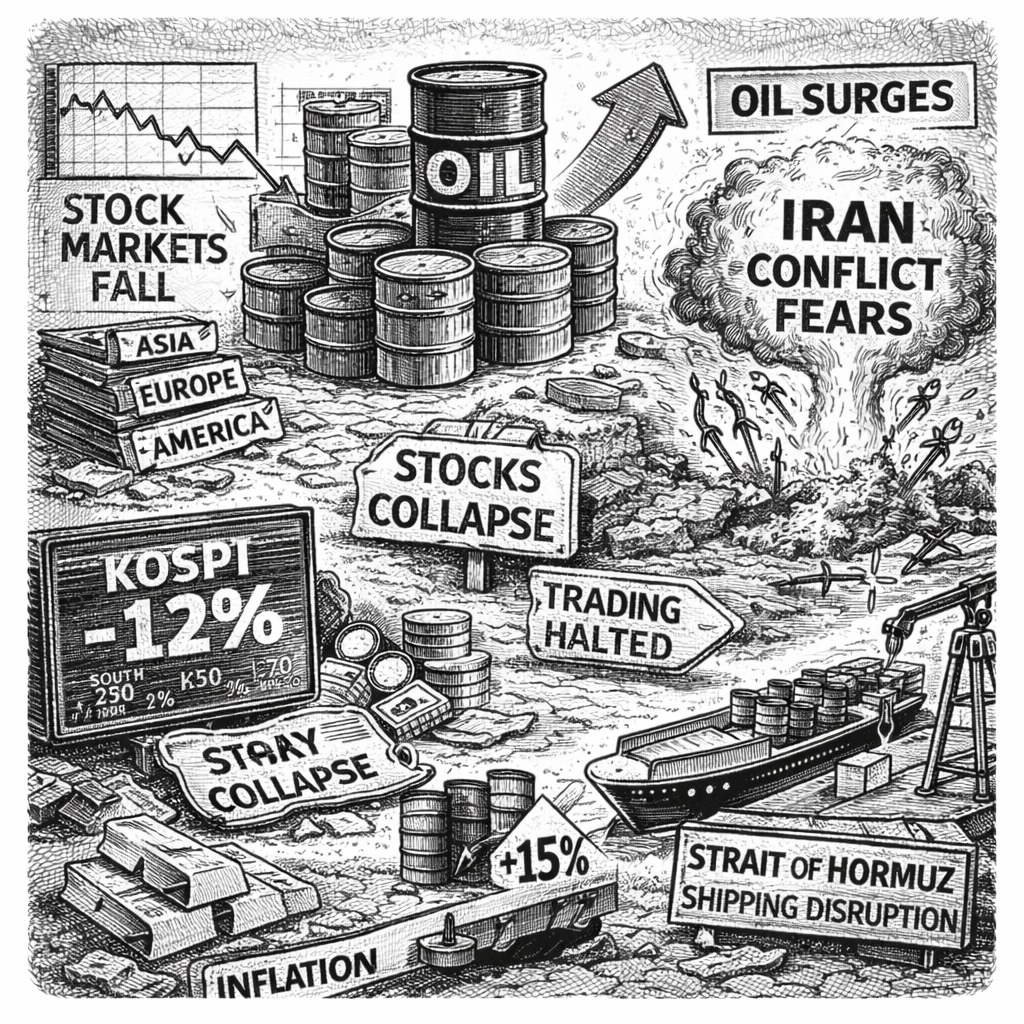
Global Markets Fall, Oil Surges on Iran Conflict Fears
Global financial markets have been shaken by escalating conflict in the Middle East, with Asian stocks suffering significant losses and oil prices rising on fears that the US-Israel war with Iran may become prolonged.
South Korea's benchmark KOSPI index closed 12% lower on Wednesday, marking one of its worst days in decades. Trading was temporarily halted after the index plunged more than 8%, triggering circuit breakers designed to prevent panic selling. Japan's Nikkei 225 fell 3.6%, while Hong Kong's Hang Seng declined 2.5%.
The market chaos reflects increasing investor concern about an energy shock that could fuel inflation. Brent crude increased 2.5% to $83.96 a barrel, having jumped 15% since strikes began on Saturday. Gas prices remained volatile after vessels near the strategic Strait of Hormuz shipping lane were targeted.
Approximately one-fifth of the world's oil and gas supplies typically pass through the Strait of Hormuz, but traffic has almost entirely halted following Iranian threats. The UK Maritime Trade Operations Centre reported a vessel was hit by an "unknown projectile" near the UAE on Wednesday, though the crew was safe.
Energy-importing Asian nations have been particularly hard hit, with South Korea and Japan especially vulnerable due to their dependence on Middle Eastern oil. South Korean chipmakers Samsung Electronics and SK Hynix fell around 20% each this week.
European markets showed mixed results, with the FTSE 100 opening slightly higher as oil and gas stocks rallied. Gold, regarded as a safe-haven asset, edged up to $5,169.
President Donald Trump stated the US Navy will protect ships in the region "if necessary" and promised risk insurance to shipping companies to ensure energy supplies. Meanwhile, analysts warn that a prolonged conflict could influence UK inflation expectations and potentially reduce anticipated interest rate cuts by the Bank of England.