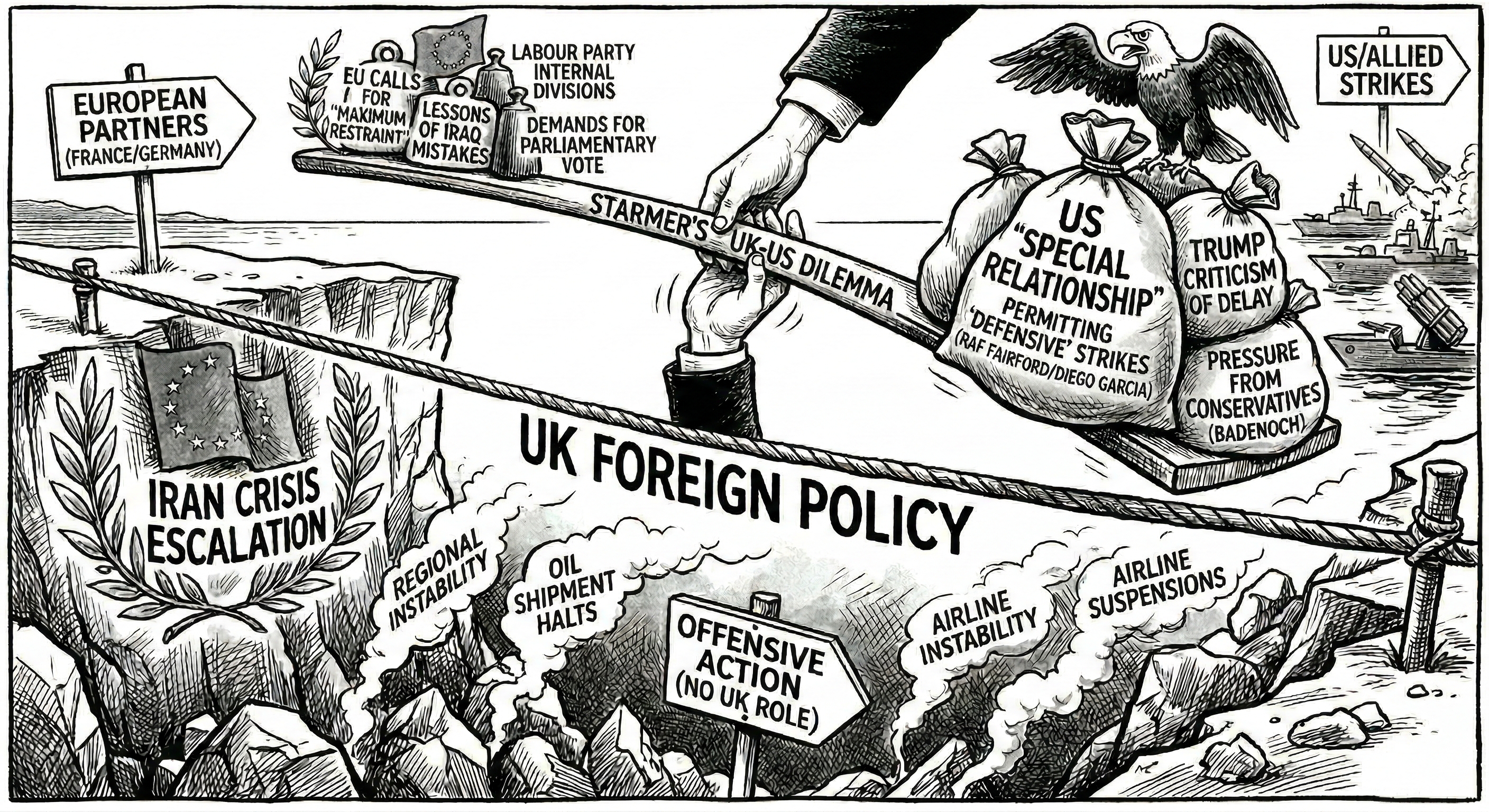
Starmer's UK-US Dilemma Over Iran Strikes
Prime Minister Keir Starmer has confirmed the UK will allow the US to use British military bases, including RAF Fairford and Diego Garcia, for "specific and limited defensive" strikes to destroy Iranian missile launch sites. The decision, announced on March 2, 2026, follows a US request and aims to protect allies and British citizens in the Gulf region from ongoing Iranian attacks.
However, Starmer has been careful to distinguish this support from endorsing the initial US-Israeli offensive strikes on Iran, in which the UK "played no role." He stated the UK has learned from the "mistakes of Iraq" and will not participate in offensive action. This cautious stance has put the prime minister in a diplomatically precarious position: he declines to fully endorse the US-led strikes, which have support from Canada and Australia, but also stops short of condemning them, as some in his party desire.
The move has drawn sharp domestic political reaction. Conservative leader Kemi Badenoch accused the government of being "too scared" to take a stronger stance against Iran due to Labour voter concerns. The Liberal Democrats and Greens demanded a parliamentary vote and warned against complicity in potentially illegal action. Meanwhile, reports suggest the delay in agreeing to the US request drew private criticism from President Donald Trump.
Internationally, Russia has urged an immediate halt to the attacks, while the EU called for "maximum restraint" and civilian protection. The UK, along with France and Germany, issued a joint statement condemning Iran's "indiscriminate and disproportionate" strikes. As the crisis escalates, with major airlines suspending flights and oil shipments halted through the Strait of Hormuz, Starmer faces the growing challenge of balancing the historic UK-US alliance with European calls for de-escalation and domestic political pressures.