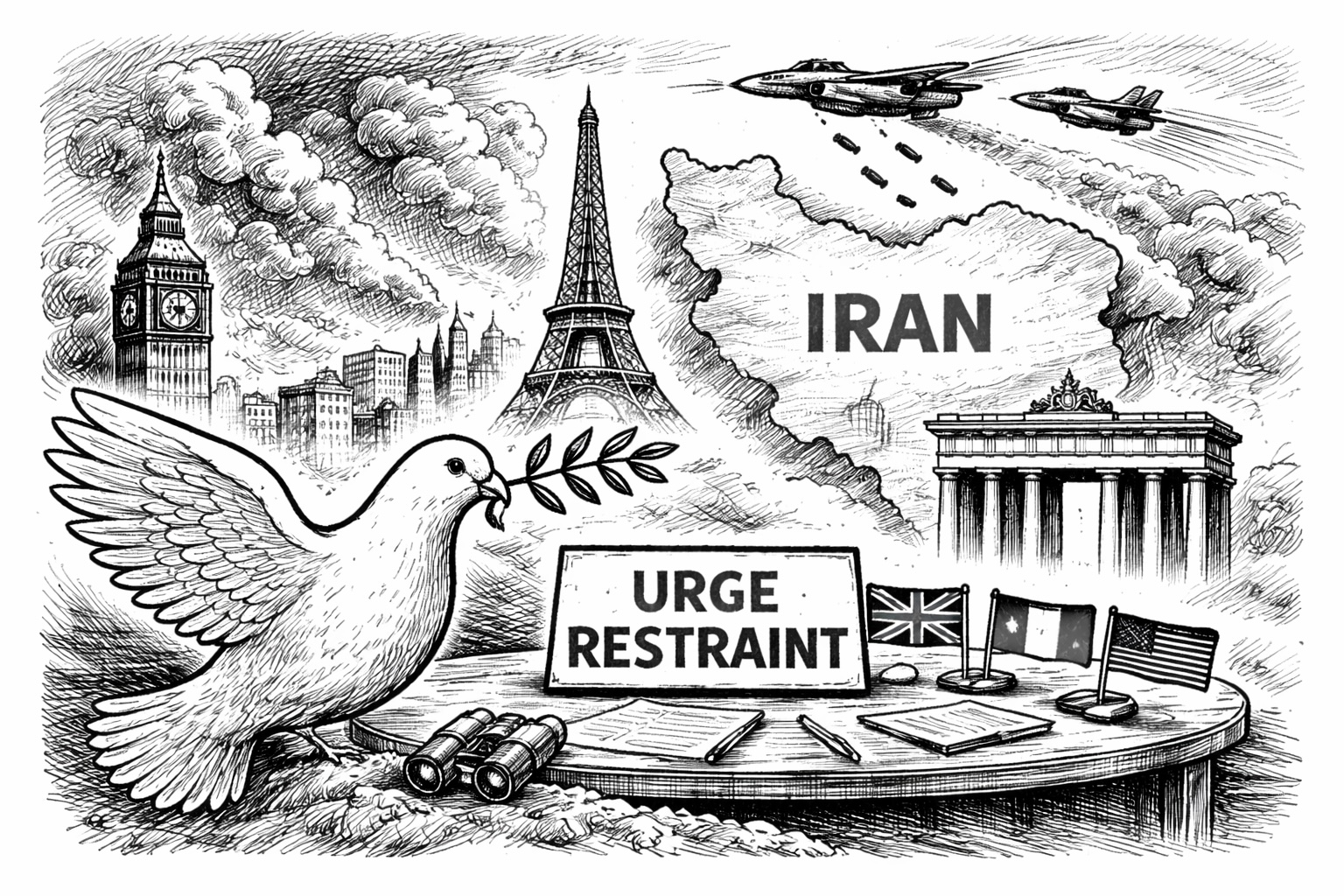
UK and Europe Urge Restraint After US Strikes on Iran
British and European leaders have responded cautiously to the US-Israeli strikes on Iran, calling for restraint and a return to diplomatic negotiations amid growing fears of regional escalation.
Prime Minister Keir Starmer spoke with President Donald Trump following the attacks, with Downing Street's statement noting they "discussed the situation in the Middle East." The UK, along with France and Germany, did not participate in nor endorse the American and Israeli actions.
Starmer emphasised that British forces in the region are operating solely in a defensive role "in line with international law," defending allies under attack from Iran. He condemned the Iranian regime as "utterly abhorrent" but stopped short of supporting regime change or explicitly backing Trump's decision to strike.
The prime minister faces political pressure from both sides: Conservatives and Reform UK accuse him of insufficient support for America, while the Liberal Democrats and SNP remain sceptical of Trump's actions. The Labour Party remains particularly wary of military intervention in the Middle East, haunted by the Iraq war’s legacy.
European allies, including France and Germany, have jointly called for renewed negotiations and warned against indiscriminate strikes. The UK, France, and Germany—known as the E3—are pushing for a diplomatic solution as they monitor the evolving crisis.
Concerns extend beyond immediate military escalation. The government is tracking British citizens in the region via its "Register Your Presence" system and is worried about economic impacts, especially if the Strait of Hormuz—a vital route for global oil shipments—becomes disrupted, potentially affecting inflation and fuel prices.
The cautious European response reflects broader concerns about unpredictable consequences, with leaders aware that military action could trigger wider chaos across the Middle East.